Did you know the history of BMX in Geelong dates back to 1980 when the very first club, the Barwon Eagles BMX Club was established? How about the fact that the foundation for the rules of Australian Rules Football were fleshed out on local soil by Tom Wills? Long before this the First Nations people engaged in Marngrook, the social foot-ball game played right here in the Western District. Geelong is also at the forefront of sports innovation, developing groundbreaking technologies, including the world’s lightest wheel. Wild stuff! Speaking of wild, did you know that Kardinia Park was once home to not just the Mighty Cats, but also monkeys, ostriches, an elephant, a lemur, and even a stag as part of the Geelong Zoo? And let’s not forget the history-making athletes from Geelong, such as Marissa Williamson Pohlman, the first First Nations woman to qualify for the Olympics in boxing in 2024.
These sporting stories and so many more make up the mould for Geelong Sports Museum.
When: Thursday – Saturday, 10:00am – 2:30pm
Where: Ground Floor, Joel Selwood Stand, Moorabool Street, Kardinia Park Stadium, South Geelong VIC 3220
Stay up to date with what’s happening in and around the region here.
View this post on Instagram
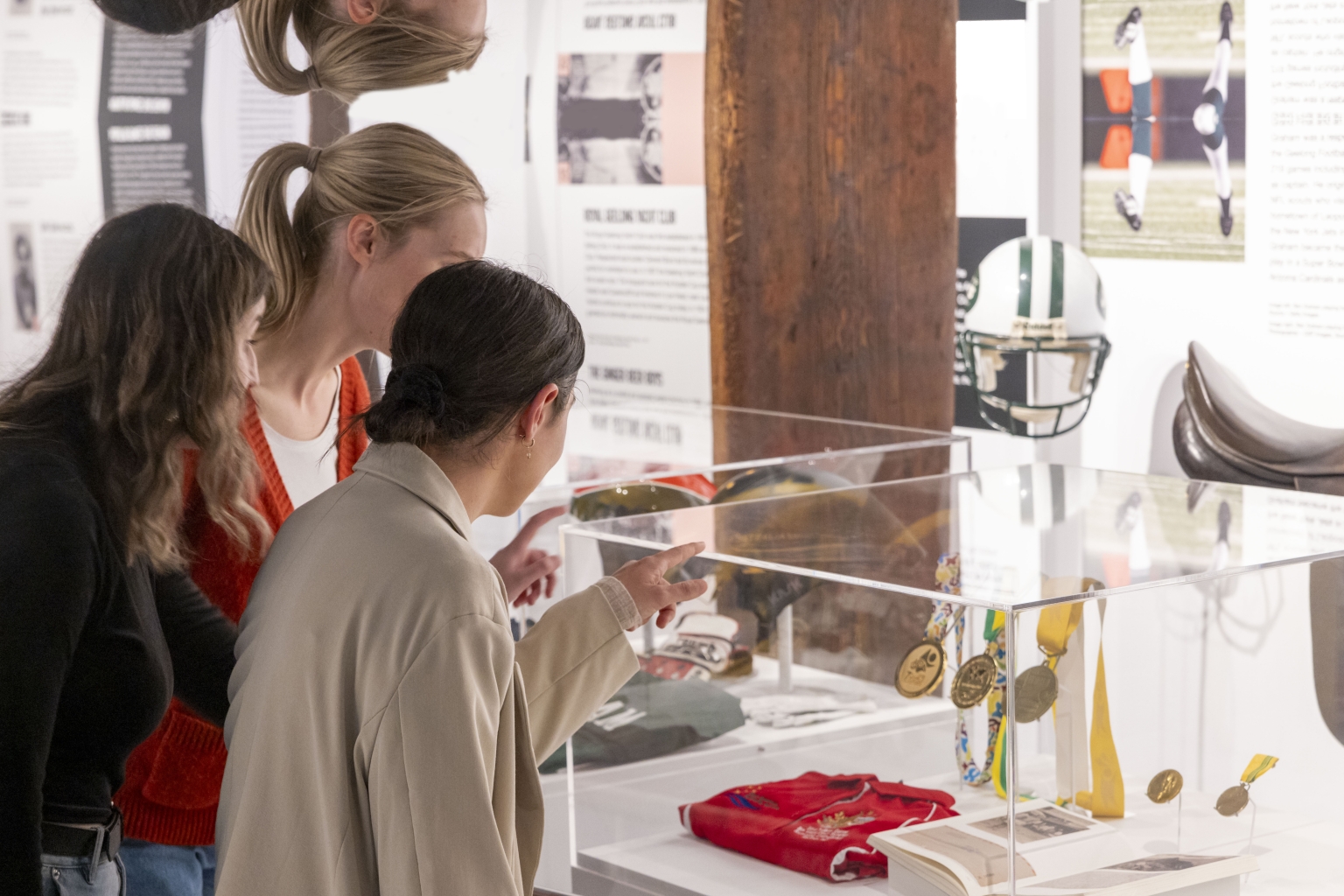
Geelong Sports Museum is now a fixture of the GMHBA Stadium DNA, an integral inclusion in the Victorian Government’s $142million redevelopment that delivered the new 14000-seated Joel Selwood grandstand.. Positioned at the Moorabool Street entrance of the Kardinia Park Precinct, Geelong Sports Museum is a dedicated display of the region’s sporting history, and contributions to the fabrics of sports foundations and advancements in Australia and the world. Having opened in 2024, the facility houses dedicated displays, precious sporting memorabilia, rotating stories of sporting greatness, interactive activities, and visual components. Education meets entertainment in this state-of-the-art museum, which has welcomed over 5,000 visitors, including more than 600 school students, in its first year.
Upon entry you are met by a glorious Acknowledgement of Country archway as designed by celebrated First Nations artist, Corrina Eccles, Wadawurrung Traditional Owner inviting visitors into the exhibition space. It’s a flood of blue and bikes in this focal exhibition zone, honouring our region’s BMX history and current trailblazers such as Matt Wyatt and the local 17 year old Junior BMX Male Athlete of the Year 2025, Cameron Gatt. Bikes, medals, trophies, video footage, and a detailed decal tell the rich story for the extreme sport. Behind this, pull up a beanbag and settle in for a feature film in the concave theatre space. It’s a curated mixed medium journey into the diverse, daredevil sport.
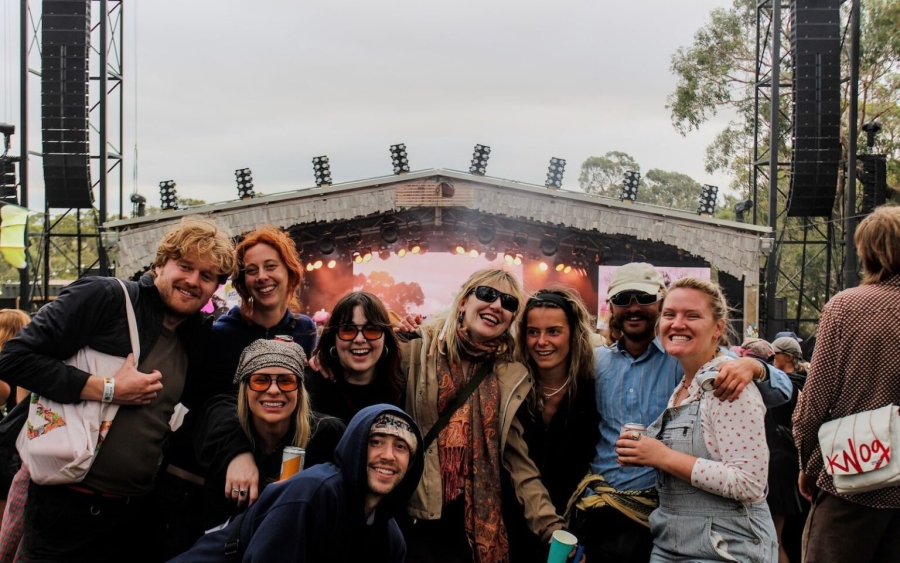
From zoo to Foo, explore the evolving history of Kardinia Park, including hosting one of Victoria’s biggest music moments welcoming rock legends Foo Fighters in 2022 as part of an initiative to reset the live music industry post-pandemic. A timeline display takes you through the major milestones of the ground’s storied past.
View this post on Instagram
The Geelong Sports Museum is curated around three key themes to connect its 80 artefacts across 30 different sports. Origins reveals the regional roots of sports spanning sea, shore, and sky, along with the greats who helped shape them. Among them is Pompey Austin, recognised as the first Indigenous Australian to play senior Australian rules football in Victoria, when he played a single game for the Geelong Football Club in 1872. The late Joe Sweeney, a key figure in developing Bells Beach surf culture and a former Olympic wrestler, is also celebrated, as is swimmer Phoebe Mitchell, who broke 75 Open World Records and competed in every Down Syndrome swimming world championship from 2008 until her 2022 retirement. Mitchell, born in a car outside Kardinia Park, is now immortalised in the stadium’s tapestry.
Game Changers honours athletes who have redefined their sports, their names now synonymous with their disciplines. Every local knows John Landy, or has attended a school athletics sports day on his namesake grounds in South Geelong. Bev Francis is Arnold Schwarzenegger’s female equivalent in the bodybuilding domain, and Gail Couper is hailed for her hangs – holding, hands down, the most Bells Beach title wins. Finally Community honours the grassroots clubs, players, and supporters who continue to sustain the region’s sporting culture. This exhibition includes the iconic yellow jersey worn by Cadel Evans during his 2011 Tour de France victory. With his establishment of the Great Ocean Road Race he has been integral in fostering the racing community of the region. There is also a dedicated Cats display to AFL legend Graham ‘Polly’ Farmer, whose handball and ruck techniques changed the game forever.
View this post on Instagram
It’s not just a walk through history tour – Geelong Sports Museum puts visitors in the action through their interactive displays. A photo booth lets you capture memories of your visit, while a rowing simulation along the Barwon River, a knot-tying wall, and a competitive two-player sports quiz challenge your skills. You can also test your tongue in the commentary box, recording your own voiceover to a play by play. Maybe the next Bruce McAvaney will come from Geelong!
While the the school holidays make for an excellent time to comes visit the rotating exhibition space, school groups and community groups are encouraged to visit the site for excursions. The Geelong Sports Museum offers more than a glimpse into local sporting history—it is a living classroom where students can connect to the Geelong region, uncover stories of achievement and resilience, and see how sport shapes culture and community. Teachers will find rich content that aligns with Victorian curriculum learning areas and capabilities, offering opportunities for inquiry, critical thinking, and cross-curricular connections. A morning or afternoon visit allows students to immerse themselves in the museum’s interactive experiences, sparking curiosity, collaboration, and reflection on their own place in the wider story of sport and community. Lunch can then be enjoyed in the Djilang Plaza, taking in the full scope of the stadium’s offering. Even better, the Geelong Sports Museum can provide educational packs to accompany the visit.
View this post on Instagram
Geelong Sports Museum celebrates the region’s rich sporting legacy while inspiring future generations to push the boundaries of excellence. It’s a must-visit for anyone passionate about sport and history, or for those who are proud of our local sporting legends, whilst also doubling as a fun date idea, a spirited family day, or a quick stop-in before cheering on the mighty Geelong Cats at home games.
Geelong Sports Museum is open Thursday to Saturday from 10am – 2.30pm. For more information and group bookings, head here.
The current most read stories on Forte

1 June 2026
I’m back in the saddle again. Well, perhaps not a saddle. That would require a certain level of poise, grace…
29 May 2026
Winter on the Bellarine has always carried a certain romance. Salt-heavy air curling off the bay. The skeletal beauty of…

27 May 2026
Launching this weekend, award-winning immersive studio White Spark Pictures is bringing its groundbreaking Virtual Reality Cinema season to Village Cinemas…
22 May 2026
If festivals had a playbook, the National Celtic Folk Festival would have written it. A celebration of music, arts, lifestyle,…
21 May 2026
It’s hard to believe that it’s only been one year since Ryrie Street entertainment hub and bar Here and Now…
19 May 2026
RISING makes its highly anticipated return from 27 May—08 June 2026, spanning ballroom to tram, live music venue to street…
12 May 2026
As RISING draws near, Melbourne’s festival of contemporary art, music, dance and ideas unveils its final wave of programming, promising…
11 May 2026
Geelong is set to don its finest for a spectacular ‘Royal’ Garden Party, raising funds for Australia’s Biggest Morning Tea…